BY THE ARUSHA NEWS REPORTER
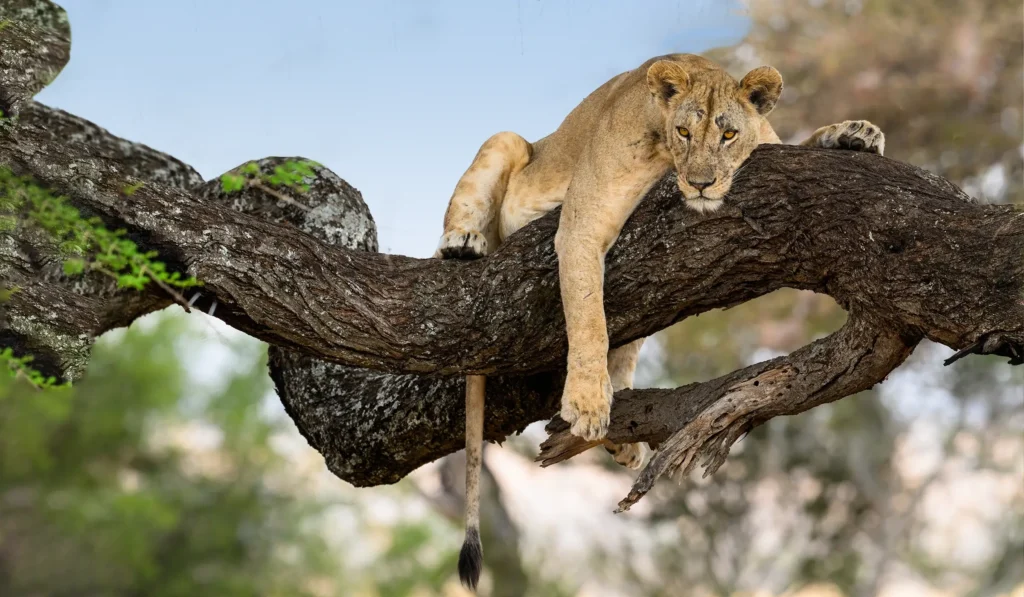
Lions in northern Tanzania are more likely to climb trees during wet seasons and afternoon hours, with females and younger cats climbing more frequently than adult males, a study has found.
Published in the African Journal of Ecology on August 6, 2026, the research examined sightings recorded between 2013 and 2020 across Lake Manyara, Tarangire, Ngorongoro and the Serengeti.
Researcher Christian Kiffner, affiliated with the School for Field Studies in Karatu and Germany’s Leibniz Centre for Agricultural Landscape Research, recorded 570 lion sightings and 127 leopard sightings.
In lions, “arboreal behaviour was rare but occurred across surveyed sites,” Kiffner wrote. Tree use occurred in 7.9 per cent of lion sightings, compared with 71.7 per cent of the leopards observed. Lake Manyara had the highest estimated likelihood of encountering lions in trees among the locations studied.
STUDY: LIONS FAVOUR TREES DURING WET SEASON
Possible explanations included cooling and gaining better views over tall grass to locate prey. However, temperature, insect abundance and hunting behaviour were not directly measured. “The analyses are not intended to identify or rank causal mechanisms,” Kiffner cautioned.
Leopards showed a different pattern, using trees frequently throughout the year, particularly around midday and when prey carcasses were present. Their climbing helped protect food from competing carnivores.