
BY MBONEKO MUNYAGA
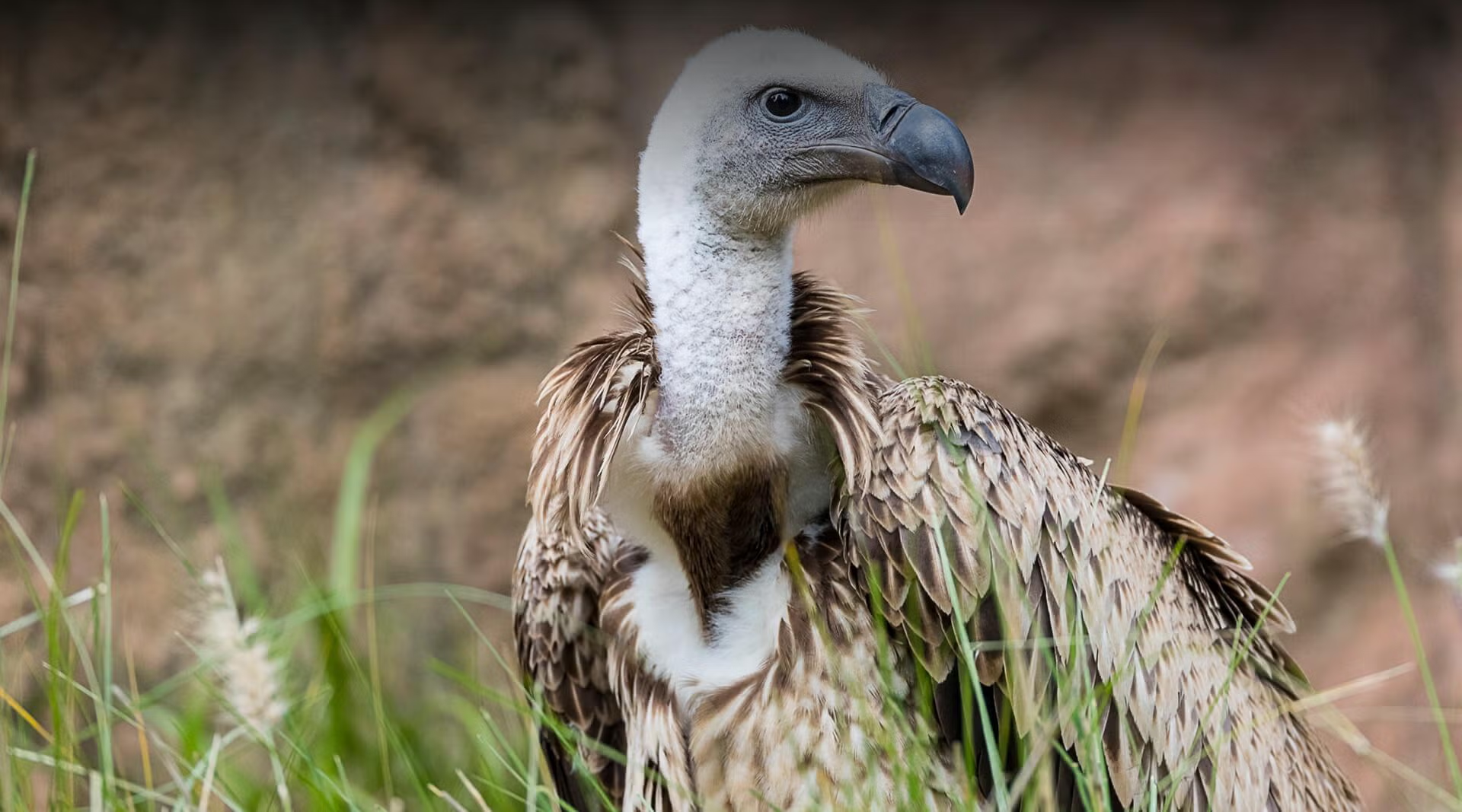
That National Parks are never littered by the skeletal remains of dead animals could partly be attributed to Rüppell’s Vultures, celebrated across Africa as the highest flying birds and ‘clean up crew’ of the plains.
The majestic birds, which can rapidly devour a large buffalo carcass with soft bones whole in under an hour, were listed as critically endangered by the International Union for the Conservation of Nature (IUCN) in 2015 following a serious crash in their populations.
However, there is hope now. A recent bird survey by the Tanzania Wildlife Research Institute (TAWIRI) has confirmed that Rüppell’s Vultures were breeding in big numbers at Olkarien in the Ngorongoro Conservation Area (NCA).
Researchers also recommended that breeding sites of the globally threatened vultures should receive special attention.
Tanzania’s 2023-2033 national vulture conservation plan says northern Tanzania could hold “the most important breeding site in East Africa” for Rüppell’s Vultures and states: “Resurveying this is a priority.”
Rüppell’s Vultures (Gyps rueppelli) act as biological dead-ends for deadly pathogens like Bacillus anthracis (anthrax), Clostridium botulinum (botulism), cholera, and rabies.
Their stomachs contain extremely acidic fluids of near battery acid levels that neutralise and destroy pathogens when they feed on animals that have died of anthrax, preventing them from contaminating the surrounding soil, water and air.
By rapidly consuming infected carcasses, they remove the source of infection before flies, feral dogs or rats could feed on them. Unlike vultures, mammalian scavengers like dogs carry and spread pathogens for rabies or anthrax spores on their fur and feet into human settlements and livestock grazing fields.
While the ‘Bearded Vulture’ is the primary bone specialist, Rüppell’s Vultures and related Gyps species regularly swallow soft bone, splintered bone fragments and cartilage whole at carcass sites.
Their stomach acid breaks down calcium phosphate and bone collagen completely, digesting bone tissue that would otherwise take years to decompose. This process returns vital minerals back into the food chain through their guano (droppings), enriching the soil across broad foraging ranges.
In savanna ecosystems like the Serengeti-Mara, African vultures clear up to 70 per cent of all dead ungulate biomass. A flock of swirling and noisy Rüppell’s Vultures, often more than 600 birds at a site, can strip a large mammal carcass down to the bone in under an hour, keeping livestock pastures clean and odour-free.
The catastrophic decline of Rüppell’s Vultures is driven almost entirely by human activities. Ivory poachers intentionally poison carcasses with agricultural chemicals (such as carbofuran) to kill vultures. Because circling vultures alert wildlife rangers to illegal poaching sites. Poachers silence them to avoid detection whilst the ‘high eyes in the sky’ could lead tour guides to where to spot lions, many a times a tourist’s apex satisfaction during a safari.
Farmers too put laced bait on cattle carcasses to kill retaliatory predators like lions or hyenas. Hundreds of vultures often feed on a single poisoned carcass, resulting in mass-mortality events.
In other regions, vultures are hunted for bushmeat or killed for traditional belief-based practices, where their body parts are used in charms under beliefs that vultures possess foresight.
As energy infrastructure expands across Africa, vultures frequently die from collisions with power lines, electrocution on pylons and strikes from wind turbines. Cliff-nesting colonies are increasingly disrupted by human encroachment, agricultural expansion and reduced availability of natural wild prey.
The highest confirmed altitude for a Rüppell’s Vulture was at 37,000 feet above sea level. On November 29, 1973, a Rüppell’s Vulture collided with a commercial aircraft over Abidjan, Côte d’Ivoire and was ingested into one of the jet engines.
Although the engine failed, the aircraft landed safely. Feather fragments recovered from the damaged engine were analysed and confirmed to belong to a Rüppell’s Vulture.

